
blegenbet @ lala110 Advancements in chromatography precision
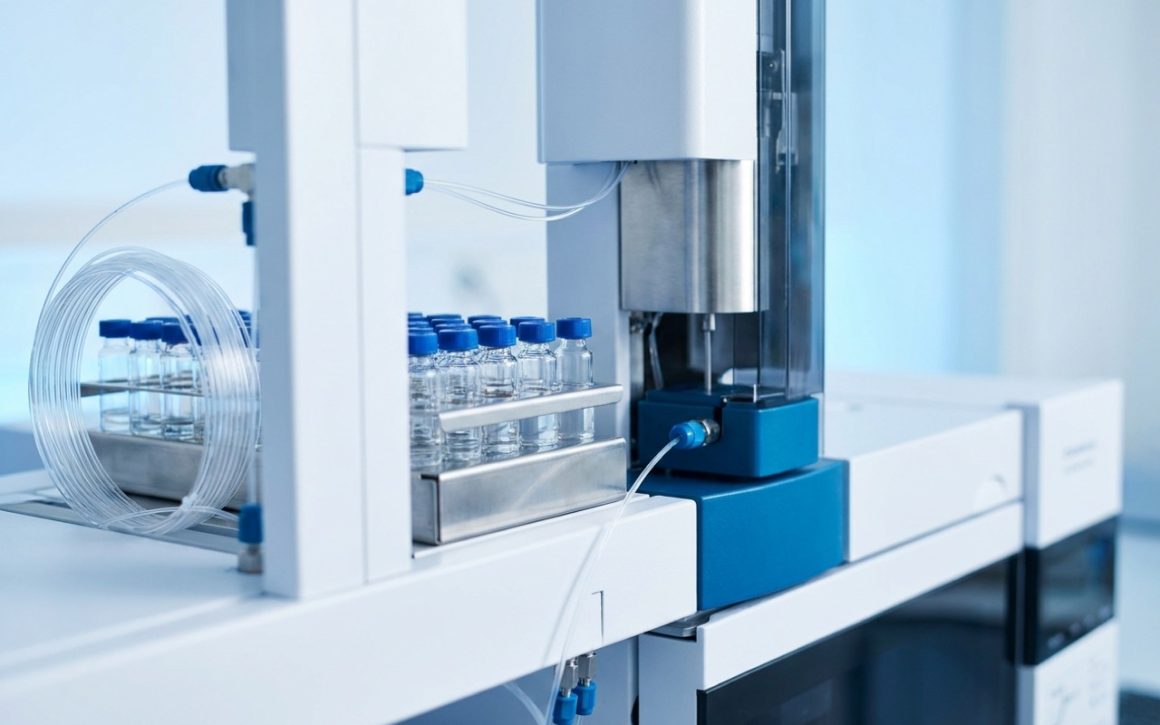
Chromatography sits at the heart of every credible peptide characterization workflow. As detection hardware and column chemistry mature, laboratories can now separate and quantify compounds at concentrations that were effectively invisible a decade ago. That leap in chromatography precision directly raises the bar for research-grade purity, batch documentation, and the confidence a lab can place in its own data.
From HPLC to UHPLC: why resolution matters
Ultra-high-performance liquid chromatography (UHPLC) uses sub-2-micron particle columns and higher operating pressures to deliver sharper, better-resolved peaks than legacy HPLC. For peptide analysis, tighter resolution means closely eluting impurities, truncation products, and deamidation variants no longer hide under the main peak. The practical result is a cleaner purity assignment and a more honest picture of what a batch actually contains.
High-resolution mass spectrometry closes the gap
Coupling separation to high-resolution mass spectrometry (LC-HRMS) adds an orthogonal layer of confidence. Accurate-mass detection confirms molecular identity, flags unexpected adducts, and helps distinguish co-eluting species that share a retention time but not a mass. Together, UHPLC and HRMS turn a single chromatogram into a multi-dimensional record suitable for method development and traceable reporting.
What parts-per-trillion detection means for research
Pushing detection limits lower is not a vanity metric. Trace-level sensitivity lets analytical teams monitor residual solvents, catalyst carryover, and low-abundance degradation products that influence stability studies. It also supports meaningful comparisons across lots, because a difference that once fell below the noise floor is now measurable and documentable.
Building precision into the workflow
Instrumentation only delivers when it is paired with disciplined practice: qualified reference standards, defined system-suitability criteria, and controlled sample preparation. Precision is a property of the whole method, not a single detector.
Peptide Strips products and the information above are intended solely for laboratory research and analytical development. They are not for human or animal consumption.