

semut555 @ penyu14 Automating sample prep for 48-hour turnaround
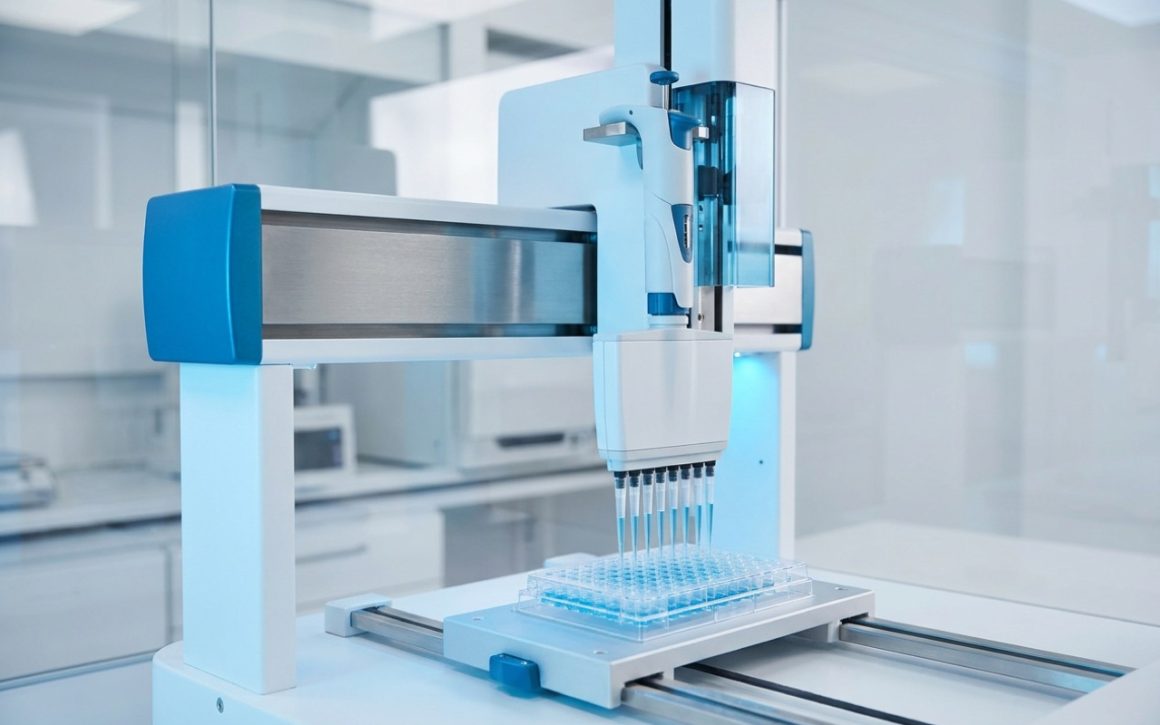
Sample preparation is where most analytical error — and most wasted time — quietly accumulates. By moving pipetting, dilution, and plating onto automated liquid-handling platforms, laboratories are compressing multi-day queues into a predictable 48-hour turnaround while simultaneously improving reproducibility.
Speed is a byproduct of consistency
The headline is faster results, but the real driver is consistency. A robotic workstation performs the same aspirate-and-dispense sequence identically across hundreds of samples, eliminating the small, human variations that force re-runs. Fewer re-runs means shorter queues, and shorter queues mean faster turnaround.
Where automation delivers most
- Serial dilutions — precise, repeatable, and fully logged.
- Plate mapping — no transcription errors between rack and plate.
- Reagent additions — controlled volumes with minimal dead time.
Closing the loop with cloud reporting
Automation on the bench pairs naturally with data automation off it. When instruments write directly into a LIMS or cloud reporting layer, results move to reviewers without manual re-keying — trimming another slice off turnaround and preserving a clean audit trail from sample to report.
Automation supports the analyst, not replaces them
The point of automation is to move skilled scientists off repetitive transfers and onto method design, troubleshooting, and interpretation — the work that actually needs judgment.
Peptide Strips products are intended solely for laboratory research and are not for human or animal consumption.